
The UK’s leading development, testing & regulatory laboratory.
Sign up to our newsletter to receive insights and news from ADSL and key technical partners.
Get started with our expert team
Get started with our expert team

May 2026 brought a number of important cosmetic regulatory developments across the UK, EU, US and Canada, with particular focus on ingredient restrictions, CMR classifications, UV filters, fragrance allergens, formaldehyde-releasing preservatives, labelling requirements and product notification data.

April 2026 reflects a regulatory landscape that is becoming more precise rather than simply more restrictive. While ingredient bans continue to evolve, the more significant shift lies in how regulators are addressing classification, exposure, and transparency in parallel.

In cosmetic manufacturing, product quality is about far more than appearance, fragrance, or performance. Behind every successful formulation lies a critical factor that can make or break a brand’s reputation: microbiological control.

March 2026 highlights a clear shift toward tighter ingredient controls, lower labelling thresholds, and increased enforcement across all major markets. At the same time, divergence between regions is accelerating, making global compliance more complex than ever.
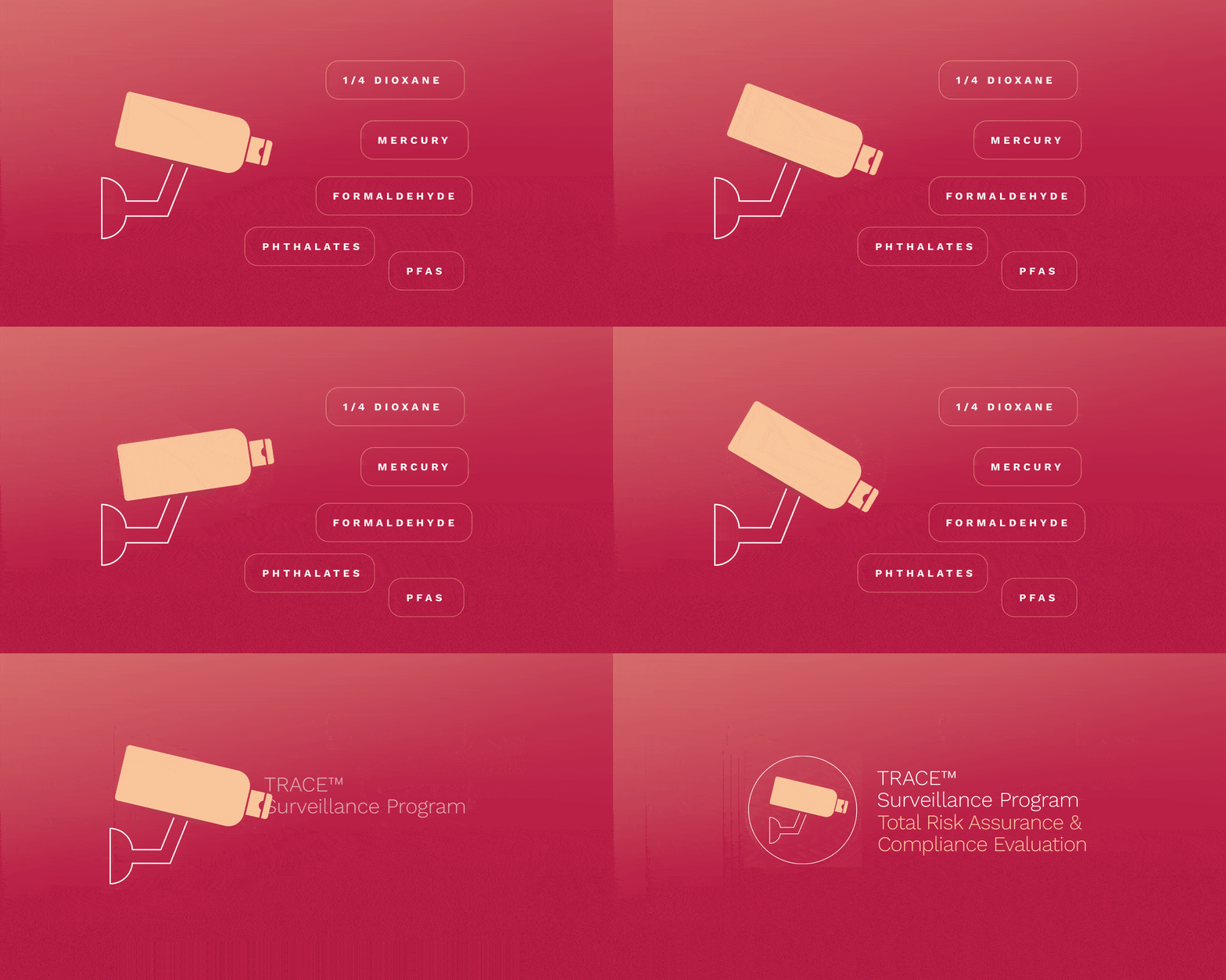
Regulatory expectations for cosmetic products are evolving. Increasingly, authorities are looking beyond individual test reports and asking whether companies can demonstrate meaningful oversight of potential safety risks across their product ranges.

Regulatory activity during February 2026 focused on ingredient safety assessments, chemical classification decisions, and increased regulatory monitoring within the cosmetic sector. In the European Union, the Scientific Committee on Consumer Safety (SCCS) published several opinions covering ingredients used in lash serums, hair dyes, preservatives, and emerging cosmetic substances such as cannabidiol (CBD).

For much of the cosmetic industry’s modern evolution, efficacy was framed largely through perception. Products were developed to feel effective, appear transformative, and tell a convincing story to the consumer.

January 2026 represents a regulatory decision point, rather than a legislative reset. While few cosmetic regulations commence exactly on 1 January, several formally adopted measures, classification changes and enforcement expectations now require immediate consideration during product review, safety assessment and compliance sign-off.
Sign up to our newsletter to receive insights and news from ADSL and key technical partners.