Regulatory expectations for cosmetic products are evolving. Increasingly, authorities are looking beyond individual test reports and asking whether companies can demonstrate meaningful oversight of potential safety risks across their product ranges.
Historically, cosmetic compliance has often relied on discrete testing events carried out at particular stages of product development or manufacturing. While these tests provide valuable information, they represent only a snapshot in time. As regulatory attention around contaminants and unintended impurities continues to increase, there is growing recognition that brands must also demonstrate that potential risks are monitored and reviewed throughout the lifecycle of a product.
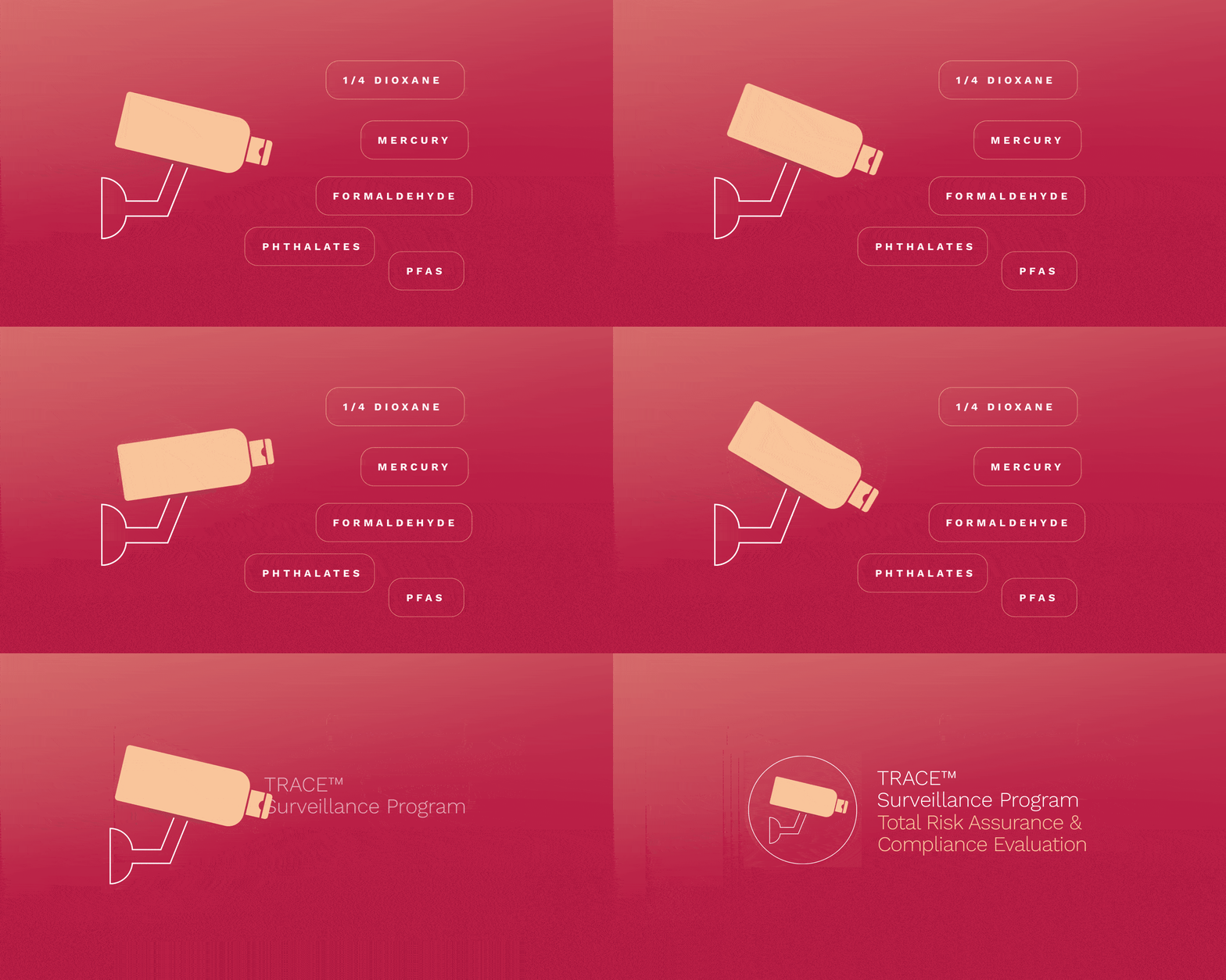
In response to this changing environment, Advance Development & Safety Laboratories Limited (ADSL) has developed TRACE™ — Total Risk Assurance & Compliance Evaluation. The programme provides a structured way for cosmetic brands to oversee contaminant monitoring and regulatory interpretation across their product portfolios, supporting a more continuous approach to compliance management.
Changing Expectations Around Contaminants
Across global markets, regulators are placing increasing emphasis on the identification and control of contaminants that may arise from raw materials, manufacturing processes, or environmental exposure. Substances such as heavy metals, nitrosamines, and process-related impurities have attracted growing scrutiny, while acceptable limits for certain contaminants have continued to decrease.
At the same time, companies are expected to demonstrate greater awareness of the risks associated with their supply chains and formulation choices. This shift reflects a broader regulatory trend toward risk-based safety management, where authorities assess not only the safety of a finished product but also the systems a company has in place to identify and manage potential hazards.
In this context, isolated testing is no longer always sufficient to demonstrate robust oversight. Instead, regulators and auditors increasingly expect to see evidence that brands maintain an informed and proactive view of contaminant risks across their product ranges.

From Snapshot Testing to Ongoing Surveillance
A single analytical result can confirm that a product meets relevant limits at a specific moment. However, it does not necessarily demonstrate how potential risks are considered over time.
TRACE™ was designed to address this gap by introducing a framework for ongoing contaminant surveillance. Rather than focusing on individual products in isolation, the programme considers the broader product range and the formulation characteristics that may influence contaminant risk.
This approach allows monitoring strategies to be guided by scientific assessment rather than applied uniformly. Factors such as ingredient sourcing, manufacturing processes, product format, and intended use can all influence the types of contaminants that may be relevant. By evaluating these aspects collectively, the programme helps ensure that analytical testing remains both targeted and meaningful.
Areas of Contaminant Monitoring
The TRACE™ programme focuses on contaminant groups that are receiving increasing attention in cosmetic regulation and safety assessments.
Trace elements such as arsenic, cadmium, chromium, cobalt, mercury, lead, antimony, and selenium are among the substances most commonly considered in this context. These elements may be present at very low levels as a result of raw material origins or manufacturing processes, making periodic monitoring an important component of product oversight.
Processing-related contaminants also form part of the evaluation. Substances such as 1,4-dioxane can arise during certain manufacturing steps and are therefore often considered when reviewing formulation risk.
In addition, TRACE™ may address organic contaminants and emerging areas of regulatory concern, including compounds such as formaldehyde, phthalates, PFAS, nitrosamines, DEA derivatives, and furocoumarins. The relevance of each substance is assessed in relation to the formulation and supply chain context of the product.
Supporting Oversight Across Product Portfolios
For companies managing extensive cosmetic ranges, maintaining visibility over potential contaminant risks can become increasingly complex. Each formulation may contain multiple raw materials sourced from different suppliers, while manufacturing processes can introduce additional variables.
TRACE™ was developed to help brands navigate this complexity by providing coordinated oversight supported by regulatory and analytical specialists. Through planned monitoring and expert interpretation of analytical findings, the programme allows companies to maintain a clearer understanding of how contaminant risks may apply across their product portfolios.
Importantly, this approach also helps create documentation that demonstrates active oversight. Such records can support regulatory inspections, retailer due diligence requirements, or internal governance procedures.

Strengthening the Evidence Base for Compliance
As cosmetic regulations continue to evolve, companies are increasingly expected to demonstrate not only that their products are safe, but that appropriate systems exist to support ongoing safety assessment.
TRACE™ contributes to this by helping brands maintain a documented record of contaminant monitoring and expert review. This evidence can support safety assessments, provide reassurance to commercial partners, and help organisations respond confidently to regulatory enquiries.
For brands operating in multiple markets, the ability to demonstrate this level of oversight can also contribute to broader compliance strategies and risk management frameworks.
Interested in TRACE™ for Your Product Range?
Our specialists can review your cosmetic product portfolio and advise whether the TRACE™ Surveillance Programme would be appropriate for your formulations, ingredients, and target markets.
By taking a structured approach to contaminant monitoring and regulatory oversight, TRACE™ helps brands demonstrate proactive compliance across their product range.
Contact Advance Development & Safety Laboratories Limited to arrange an introductory discussion with our regulatory and analytical team.